


AI Is Getting Into All the Cracks
AI Is Getting Into All the Cracks


When analysing companies at Dundas, we always ask ourselves a simple question: Is the past prologue?
It is an important question because investors today face a market environment unlike anything seen in decades. Equity markets have delivered unusually strong returns in recent years, significantly above long-term averages. Since 1970, global equities have generated annual returns of around 8.3% per annum in US dollars. Yet over the last three years, the MSCI ACWI has delivered more than 20% per annum.
That is a remarkable outcome.
However, history reveals to us that periods of exceptional returns rarely occur in isolation. They are usually accompanied by a powerful narrative. Today, that narrative is artificial intelligence.
AI is spreading through the economy
When I think about the pervasiveness of AI across the market, a famous line by Winston Churchill comes to mind “never in the field of human conflict was so much owed by so many to so few”. The context, of course, is entirely different, but the idea holds up for investors today: never has so much of the market depended on so few companies.
AI is getting into all the cracks of the global economy. It is reshaping productivity, transforming competitive dynamics and creating opportunities that were unimaginable only a few years ago. As investors, we see this firsthand across almost every industry we analyse.
The potential is enormous. The challenge is that markets have noticed too.
The largest beneficiaries of AI now represent an increasingly dominant share of global equity indices. Market concentration is now at levels that would have seemed extraordinary a decade ago, with a relatively small number of companies accounting for a very large proportion of index returns, index earnings expectations and index valuations.
On the surface, market leadership may appear to be broadening as AI investment spreads beyond technology platforms and semiconductors. Yet many of the beneficiaries remain dependent to the same capital-spending cycle. There may be more beneficiaries, but that does not mean that there are necessarily more independent drivers of return.
This backdrop has been challenging for many active managers, including Dundas. When leadership narrows and capital floods into a handful of mega-cap companies, diversification can look like a disadvantage. Investors may understandably question why they should own anything other than what has already worked.
When index success becomes index risk
This is where we believe the picture becomes more interesting. The same forces that have created index success are also creating index risk.
Concentration can work brilliantly while everything goes right and expectations are met. It becomes less comfortable when growth slows, regulation changes, competition intensifies or expectations simply become too optimistic. Ultimately, the higher the concentration, the greater the market dependence on a limited number of outcomes.
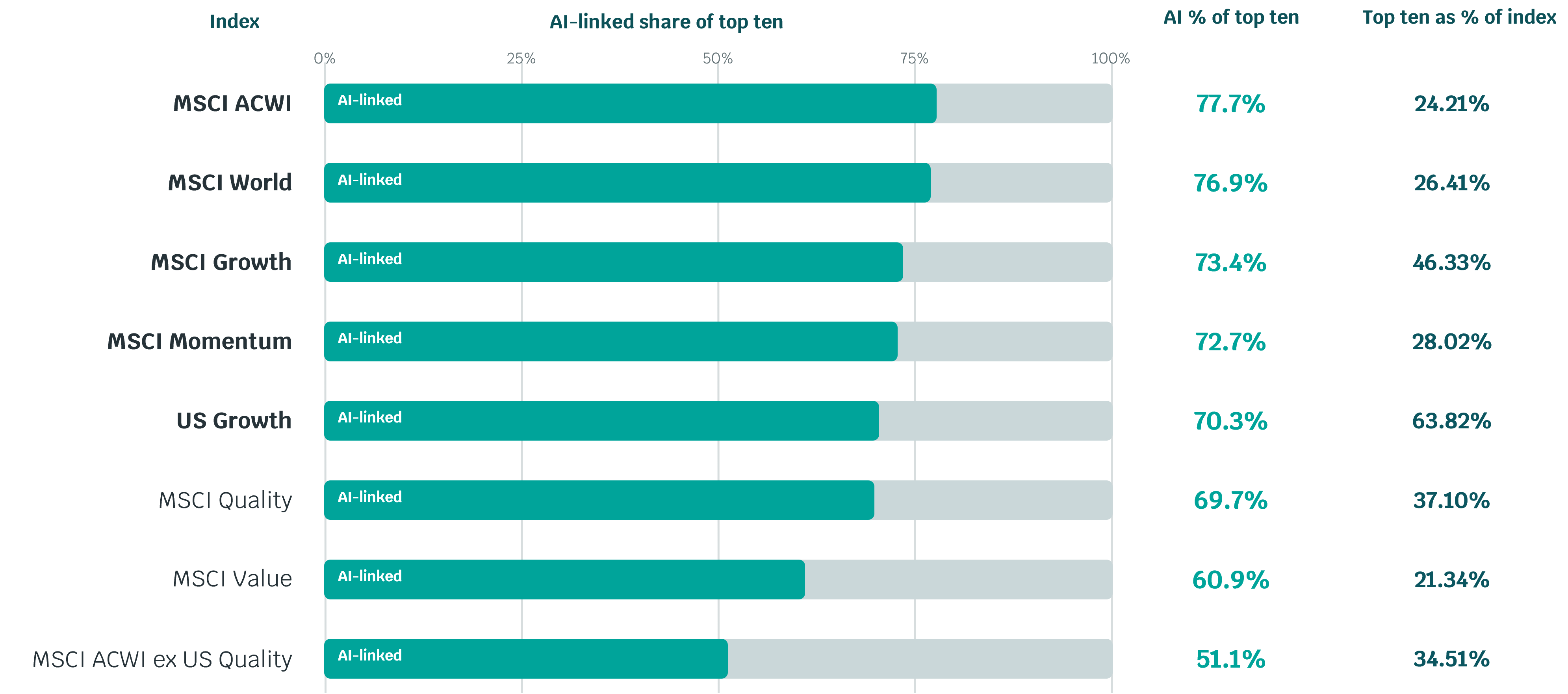
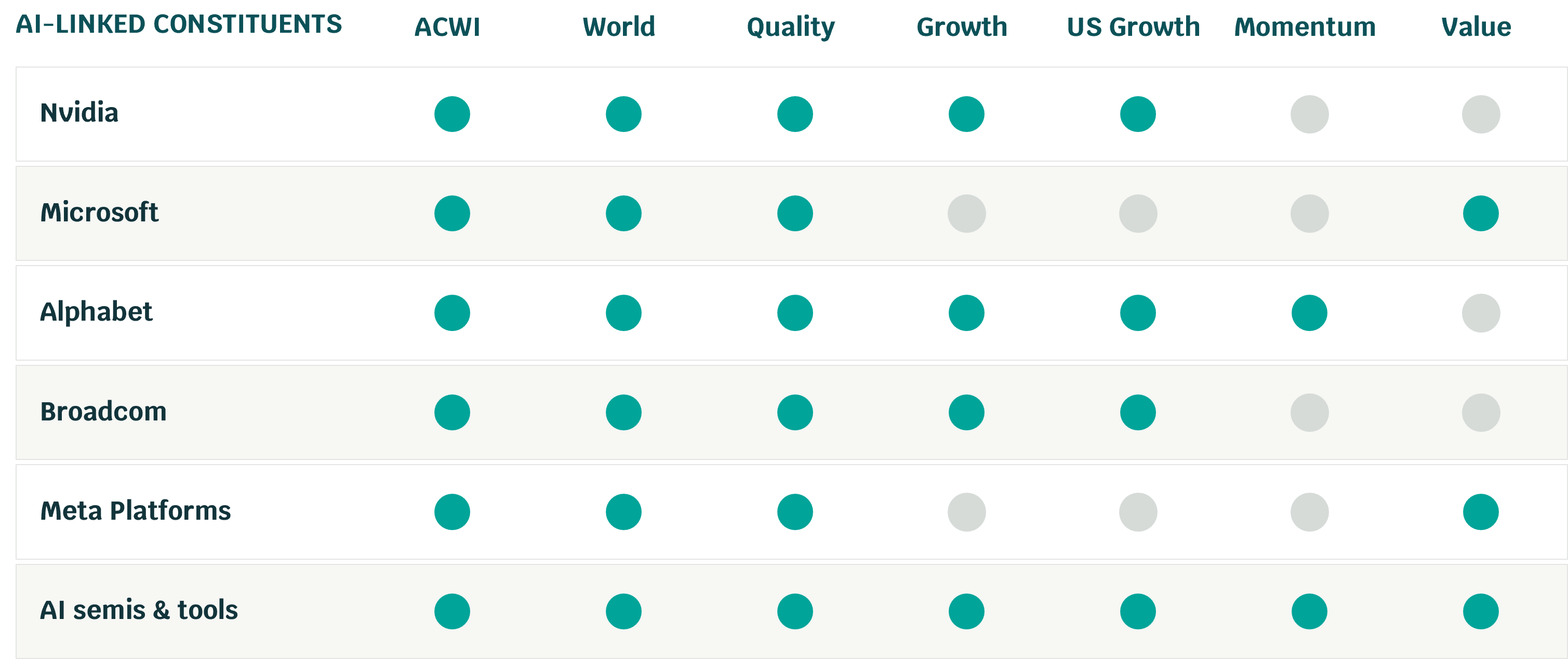
Different indices may carry different labels, whether broad market, growth, quality or momentum, but if you look beneath those labels, investors may find many of the same AI-linked companies driving returns. What appears diversified by index can therefore be more concentrated underneath.
That is one reason we believe the opportunity set for active management is becoming more compelling.
We are not standing apart from the AI theme. We recognise AI’s potential, but we are also conscious of increasing concentration and heightened expectations. The aim is to participate where the fundamentals support the investment case, without losing sight of valuation or risk.
A different anchor for long-term returns – Heriot Global Fund
At Dundas, we are not trying to predict the next market fad. We are focused on identifying businesses capable of delivering resilient and growing cash flows through multiple economic cycles. More importantly, we seek businesses that can grow their dividends year after year.
Since launch in March 2013, the Heriot Fund has delivered approximately 10% per annum. Underpinning that performance has been dividend growth of around 11% per annum.
That relationship matters.
Dividend growth is evidence of a business that continues to create value, generate cash and allocate capital effectively. Over long periods, it provides a fundamental anchor for shareholder returns.
So, is the past prologue? – Heriot Global Fund
For the Heriot Fund, we believe the answer can be yes. The drivers that delivered our historical returns remain intact because they are rooted in the growing cash flows and dividend streams of the businesses we own.
For broad market indices, we are less certain. Future returns may depend increasingly on whether a small number of AI-driven winners can continue to exceed already elevated expectations.
As AI gets into all the cracks of the economy, investors should remember that it has also found its way into all the cracks of the index.
And when everyone is standing in the same place, it is often worth looking beyond today’s leaders to consider where the next opportunities might emerge.
For more articles like this, subscribe to David Keir's newsletter "Dividend and Conquer"
Disclaimer
Dundas Global Investors is the trading name of Dundas Partners LLP. Dundas Partners LLP is authorised and regulated by the Financial Conduct Authority (FCA) in the UK, the Securities and Exchange Commission (SEC) in the USA, and the Australian Securities and Investment Commission (ASIC) in Australia. The Authorised Corporate Director for the Heriot Investment Funds is Waystone Management (UK) Limited which is also authorised and regulated by the Financial Conduct Authority.
Dundas Partners LLP provides investment management services to clients in the UK, USA, Australia, and New Zealand. In this communication Dundas Partners LLP may be referred to as DGI, Dundas or Dundas Global Investors. This document is a financial promotion and intended for professional, eligible counterparty and institutional investors only. The information presented is for the intended recipient(s) and is not to be shared or disseminated without our prior approval. This material has not been prepared for retail clients. Investors are reminded that the price of shares and the income derived from them is not guaranteed and may go down as well as up. Past performance is not a reliable indicator of future results.
This document contains information produced by Dundas and sourced from others where stated. The images used are for illustrative purposes only. The views expressed are those of Dundas and are based on current market conditions. They do not constitute investment advice or a recommendation to buy any security which has been highlighted in this material. Although this communication is based on sources of information that Dundas believes to be reliable, no guarantee is given as to its accuracy or completeness.
In relation to FCA handbook ESG 4.3, Dundas does not market these funds as a ‘sustainability product’. Use of any sustainability related terms in describing the characteristics of the strategy, or inclusion of any third-party information which measures sustainability of our portfolios are for information purposes only.The MSCI® information contained herein: (1) is provided ‘‘as is,’’ (2) is proprietary to MSCI and/or its content providers, (3) may not be used to create any financial instruments or products or any indexes and (4) may not be copied or distributed without MSCI’s express written consent. MSCI disclaims all warranties with respect to the information. Neither MSCI nor its content providers are responsible for any damages or losses arising from any use of this information.
For full information on fund risks and costs and charges, please refer to the Key Investor Information Documents, Annual & Interim Reports, and the Prospectus, which are available on our website (https://www.dundasglobal.com). Recent performance information is also shown on factsheets, available on the website.